God is Still Writing Christian Sleeve SV
A Quiet, Confident Statement—Not Just Another Sleeve Design
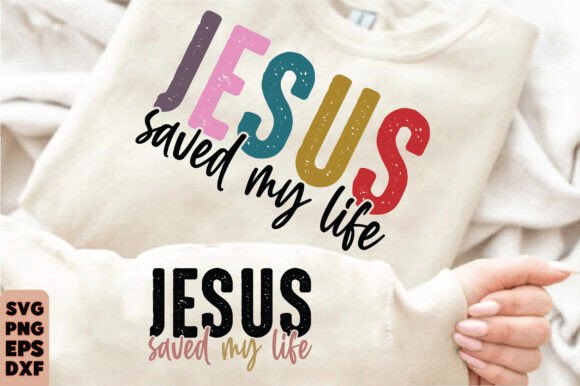
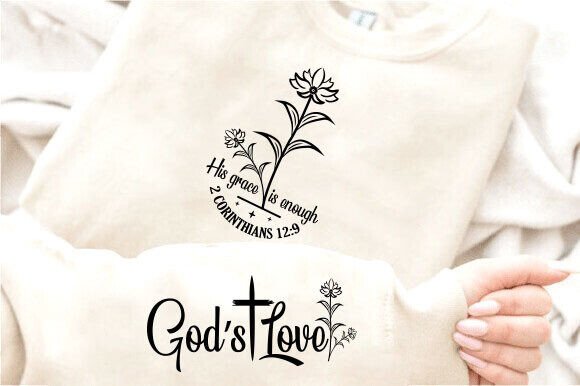
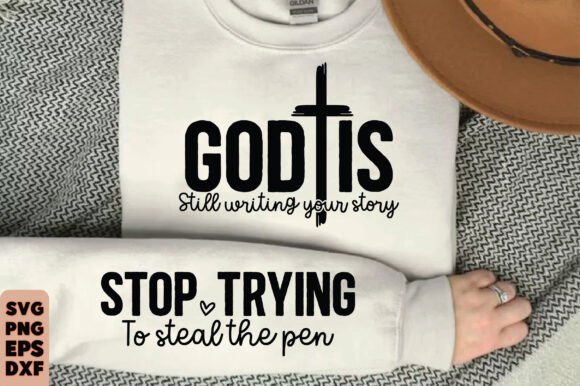
First impression? God is Still Writing Christian Sleeve SV lands with gentle weight—not loud, not flashy, but deeply intentional. It reads like a whispered truth rather than a shouted slogan. The script flows with soft curves and modest contrast in line weight, suggesting handwritten sincerity over graphic boldness. There’s no ornate border, no decorative flourishes crowding the message. That simplicity is its strength—and its warning. This isn’t a design that hides behind embellishment; it lives or dies on legibility, balance, and how gracefully it moves across fabric.
Where It Finds Its Truest Home
I recently tested God is Still Writing Christian Sleeve SV on a midweight cotton-blend sweatshirt for a small-batch boutique order—a limited run of cozy, faith-based holiday gifts. The sleeve placement felt natural: centered just below the shoulder seam, angled slightly to follow the arm’s curve. It didn’t shout from across the room, but it invited closer looking. Customers paused. Smiled. Said things like, “That’s exactly how I feel right now.” That quiet resonance is what makes this design work so well for handmade products where emotional connection matters more than visual noise.
It shines on relaxed-fit tees, oversized totes, linen pillow covers, and unbleached cotton tea towels—surfaces where texture supports, not competes with, the script’s organic rhythm. As a machine embroidery design, it holds up beautifully on baby onesies (with proper stabilizer), aprons for church bake sales, and even lightweight knit caps—if digitized thoughtfully for stretch. For Etsy sellers and craft fair vendors, it’s a strong candidate for curated collections: “Thoughtful Faith Goods,” “Quietly Christian Gifts,” or “Nursery & Everyday Encouragement.”
Where Caution Is Built Into the Stitches
Don’t rush this one onto thin jersey t-shirts without testing. The letterforms have subtle tapering and delicate joins—especially in “Still” and “Writing”—that can blur or feather on unstable, low-thread-count fabrics. On dark fabric, thread color choice becomes critical: a warm cream or heather gray works better than stark white for maintaining softness. And if you’re planning dense fill stitch backgrounds or satin-stitched outlines (which aren’t part of the base design but are sometimes added), recheck stitch density. Overloading the area risks puckering on lightweight knits or textured weaves like bouclé sweatshirts.
Curved surfaces demand attention too. On a structured cap, the script’s natural flow may need slight manual adjustment—slight compression at the top, gentle elongation toward the bottom—to avoid distortion. And while it’s labeled under T-Shirt Designs, its proportions and pacing make it less ideal for tiny hoops (under 4×4 inches) without scaling down—and scaling down risks losing the nuance in the letterforms entirely.
What Real Stitching Reveals About Value
When stitched cleanly, God is Still Writing Christian Sleeve SV elevates perceived value—not through complexity, but through restraint. A well-executed version on a premium French terry sweatshirt feels like a personal keepsake, not mass-produced merch. That directly impacts customer trust: buyers recognize care in execution, and they associate that care with your brand. For creative entrepreneurs, that means stronger repeat orders, better Etsy reviews (“so beautifully done”), and higher willingness to pay for customization—like pairing it with a monogrammed initial or a coordinating cross motif on the opposite sleeve.
It also reinforces brand consistency for shops rooted in authenticity. You won’t confuse this with trendy, fast-fashion faith graphics. It fits naturally alongside neutral palettes, natural fibers, and slow-made aesthetics. And because it avoids cliché imagery (no doves, no stained glass borders), it stays fresh across seasons—equally appropriate for a spring baptism gift or a winter solstice encouragement bundle.
Practical Designer Notes You’ll Actually Use
- Always test on scrap fabric first—especially if using textured, stretchy, or dark materials. Watch how the “S” in “Still” and the crossbar in “T” hold up.
- Check thread color contrast before stitching full runs. Try matte cotton threads instead of high-sheen polyester for softer impact on natural fabrics.
- Review stitch density in your embroidery software. If fill areas feel heavy, consider reducing density by 5–10% for breathable knits.
- Confirm hoop size compatibility. While designed for standard sleeve placement, verify the file’s actual dimensions match your workflow—some versions may include optional smaller/larger variants.
- Inspect small details at 200% zoom: look for stray jump stitches near the baseline, inconsistent satin stitch direction in curved letters, or under-digitized corners.
- Test black-and-white mockups before finalizing listings. Does the design retain personality when stripped of color context?
- Compare light vs. dark background previews—not just for contrast, but for how the script’s weight shifts visually.
- Use cutaway or tear-away stabilizer appropriately: cutaway for knits, tear-away for stable wovens like canvas tote bags or linen pillow covers.
- Verify licensing terms before selling finished embroidered items commercially—or listing the digital embroidery file itself. Some versions allow small-batch commercial use; others are personal-only.
Final Thought: It’s Not Just a Design—It’s an Invitation
God is Still Writing Christian Sleeve SV doesn’t try to be everything. It’s not built for high-impact festival merch or viral social posts. It’s built for the quiet moments—the hand-stitched baby blanket tucked into a hospital bag, the embroidered apron worn while baking communion bread, the custom sweatshirt gifted after a season of waiting. As an embroidery designer and reviewer, I keep coming back to how honestly it wears its purpose: to remind, not impress; to comfort, not compete.
If your craft business values intention over volume—if your customers seek meaning in the handmade, not just the machine-made—then this design earns its place in your library. Not as filler. Not as trend-chasing. But as a trusted, quietly powerful tool in your embroidery project toolkit.